AZIZ INCLUSION AWARD '26 WINNER ANNOUNCEMENT
29 September 2026
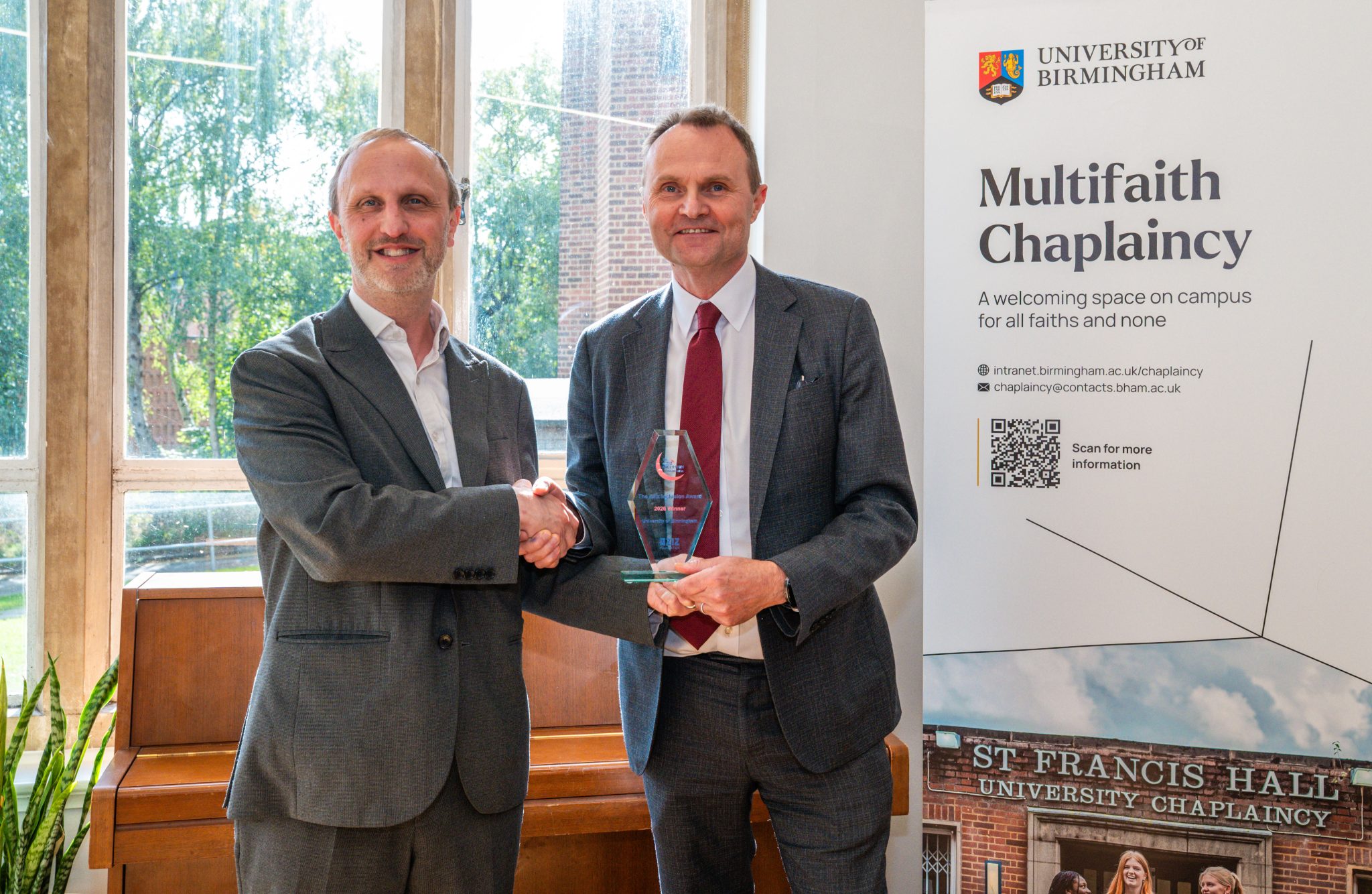
The University of Birmingham has been named the 2026 winner of the Aziz Inclusion Award, which recognises higher education institutions that have demonstrated excellence in supporting the British Muslim student experience.
The award is presented by the Aziz Foundation, a UK charity supporting British Muslims through postgraduate scholarships and community grants. It recognises Birmingham’s commitment to creating an inclusive and welcoming environment for one of the largest and most diverse Muslim student communities in UK higher education.
With more than 6,000 Muslim students on its Edgbaston campus, the University has developed a holistic approach to inclusion, bringing together faith-sensitive facilities, inclusive policies, tailored student support and strong partnership with students.
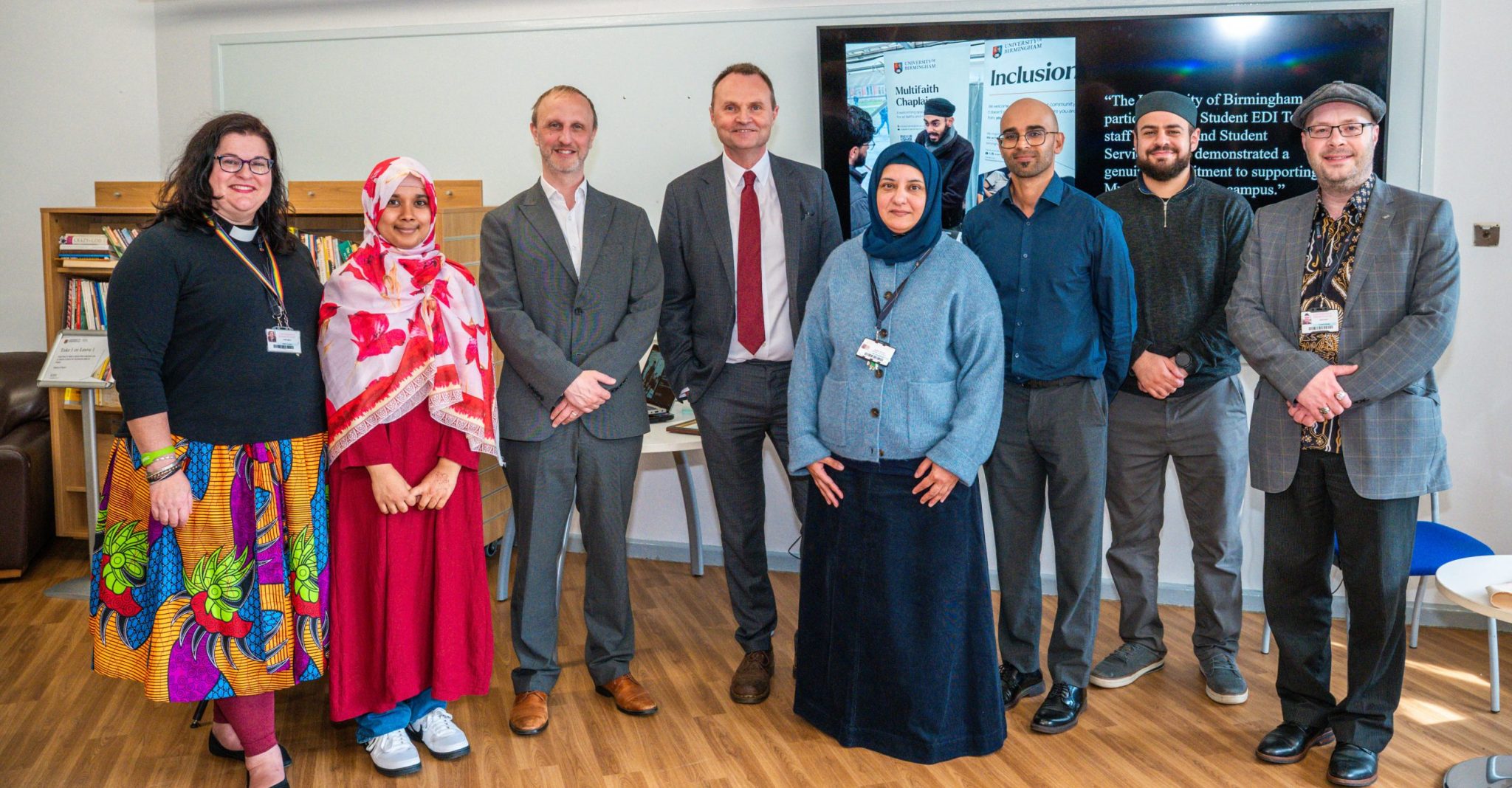
Speaking after a presentation ceremony at the campus Multifaith Chaplaincy, Vice-Chancellor and Principal, Professor Adam Tickell, said: “The University of Birmingham’s selection as the 2026 winner of the Aziz Inclusion Award reflects the dedication and commitment of colleagues and students across the University to creating an inclusive and welcoming environment for all.
“Through faith-sensitive facilities, inclusive policies and tailored student support, we are embedding inclusion across every aspect of university life.
“With one of the largest and most diverse Muslim student communities in UK higher education, we continue to learn from our students, staff and partners to create an environment where students and staff feel a strong sense of belonging and can flourish in every part of their lives.”
Judged by an experienced panel of Aziz Foundation trustees, staff and external stakeholders, the University of Birmingham was commended for a range of initiatives supporting Muslim students. These include dedicated prayer facilities, halal food provision, alcohol-free accommodation, and a formal Code of Practice for accommodating students’ religious observance.
Recent improvements to faith-based facilities include the opening of a new central prayer space next to the Library, refurbishment of existing prayer facilities, and extended opening hours for the central Islamic prayer room in University Centre. The University now provides three dedicated Islamic prayer rooms across the Edgbaston campus.
The University’s partnership with its Islamic Society (ISoc) was also highlighted by the judges. Working together, the University and ISoc support a range of events and initiatives that bring students, staff and the wider community together. These include the annual Community Iftar during Ramadan, which welcomes more than 600 attendees.
The judging panel also recognised the University's commitment to prospective students who have sought refuge in the UK through its Sanctuary Scholarship programme. As a University of Sanctuary, Birmingham provides financial, pastoral and academic support to students whose education has been disrupted by conflict, including students from Gaza and the wider Palestinian context.
Joe Dobson, Director of the Aziz Foundation, said: “The Aziz Inclusion Award is now in its fourth year and is always keenly fought over, so this is a real achievement by the University of Birmingham.
“At a time when life is becoming increasingly challenging for young Muslims, this award has become a symbol of what is possible for universities in the higher education sector.”
This latest recognition reflects the University’s wider commitment to creating an inclusive culture where students and staff from all backgrounds can belong and thrive. Earlier this year, the University achieved Silver status in the Race Equality Charter, recognising significant progress in advancing race equality across the institution, shaped by insights from more than 2000 students.
The University of Birmingham has the second most diverse student population among Russell Group universities outside London. This diversity is backed by initiatives including Birmingham Scholar, which supports more than 3,000 students from underrepresented backgrounds, and the 125th Anniversary Scholarships for Black British Researchers, which has offered over 20 fully funded doctoral scholarships.
Its commitment to inclusion also extends to staff through targeted programmes such as the £1 million ASPIRE programme, which supports the development of a more inclusive research culture, and improved career progression for racially minoritised researchers and related staff.
Mustafa Razzak, Chaplain at the University of Birmingham said: “We have approaching 1,000 students coming to pray each week so we have a very vibrant and expanding Muslim community here.”
Earlier this year, the University's Race Equality Network was also recognised at the British Diversity Awards, receiving Highly Commended in the Outstanding Ethnicity Network of the Year category.
Together, these achievements reflect a University-wide commitment to inclusion, removing barriers to participation, fostering a positive institutional culture, and creating an environment where everyone can succeed.