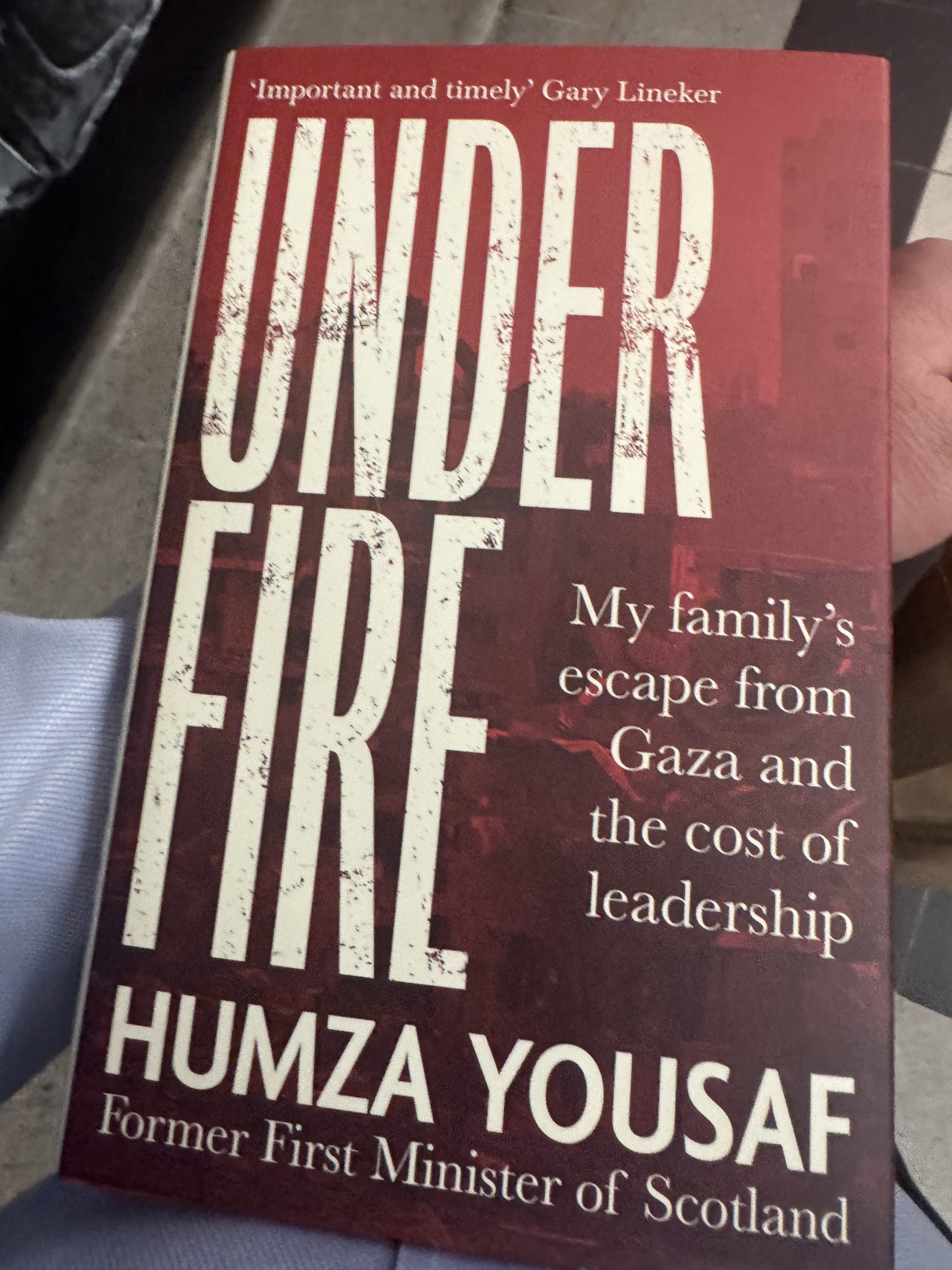
Humza Yousaf's cry for humanity
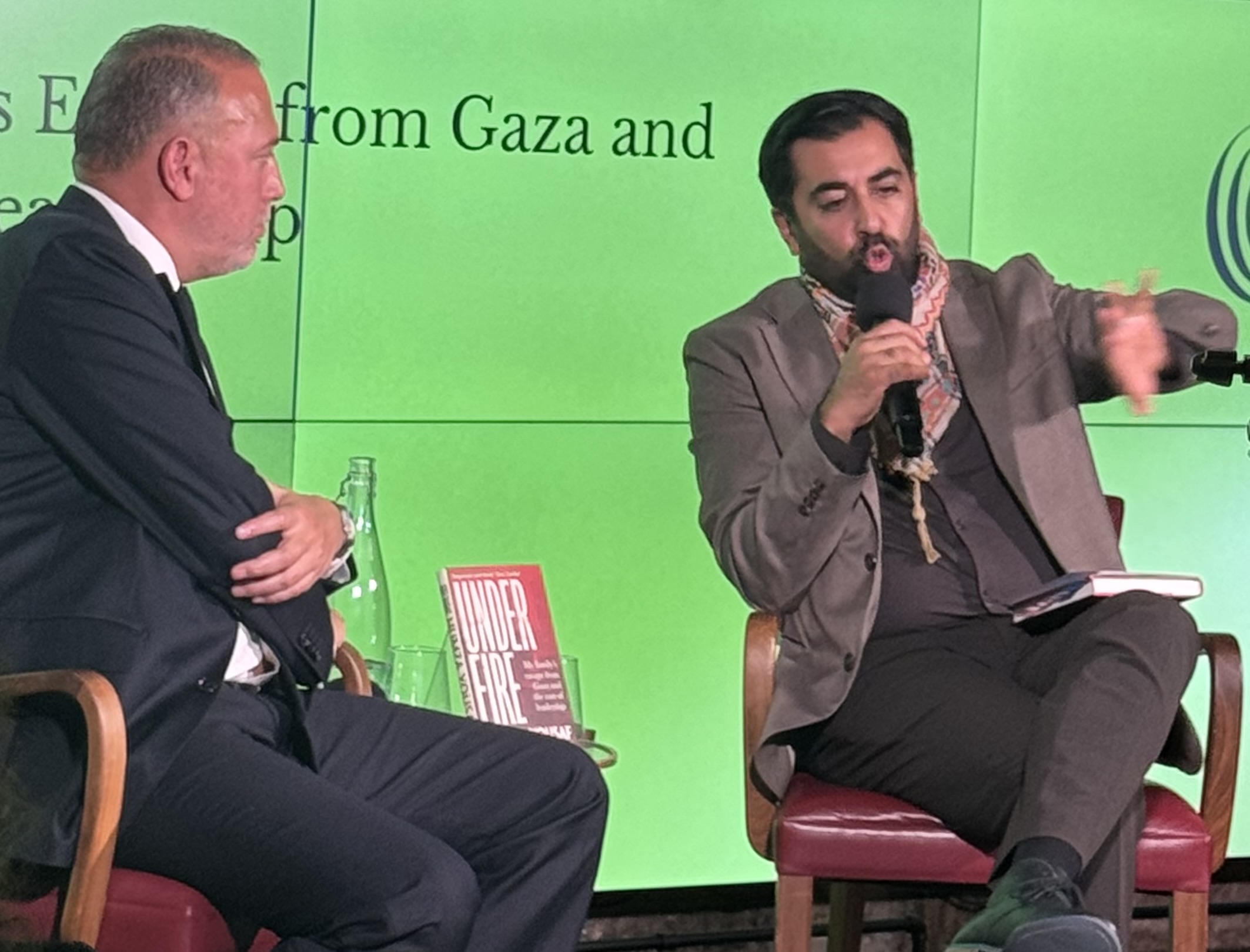
A CRY FOR HUMANITY
Humza Yousaf, the former First Minister of Scotland, knew the moment he heard of the Hamas attack on southern Israel that the reprisals on Palestine would be severe. What he could not have foreseen was how they would impact on him as a family man as well as a politician when his in-laws found themselves in the line of fire while visiting Palestine as the Israeli forces began their bombardment.
On the third anniversary of the Hamas attack, Yousaf has published Under Fire, a moving account of how he managed to get through that traumatic time, and, earlier this week, he was questioned about the book and the experience by Husam Zomlot, the Palestinian ambassador to the UK.
Almost all of Zomlot's fellow Middle Eastern ambassadors turned out for the event, and what emerged, listening to these two intelligent, thoughtful individuals in conversation, was a powerful sense of the futility of war and how it is always the many who end up suffering for the actions of the few.
Yousaf was preparing for his all-important first speech as leader of the SNP when the war began, but he was immediately conscious of how he needed to separate himself as a politician and as a family man, and, accordingly, knew getting his family out of Gaza had to be his priority.
As his father-in-law Maged was Palestinian, it was not easy for him to leave his beloved homeland, but, after a series of thwarted attempts, he and his wife Elizabeth eventually made it back to Scotland when the sense of survivors' guilt inevitably kicked in. Yousaf welcomed Andy Burnham's tougher line on Israel, but wanted an end to all arms sales to the state. He said human rights laws had been broken by Israel on such a horrific scale that he would not rest until he saw Netanyahu in handcuffs in The Hague.
Yousaf emerged from Zomlot's empathetic interview - often broken by rounds of applause from his audience - as a grounded man with a strong sense of what mattered in life and what didn't. It was a privilege to have been there, and, afterwards, to have shaken his hand. It was a celebration not of a political career - he freely admitted he got some things wrong with that - but of a human being.